
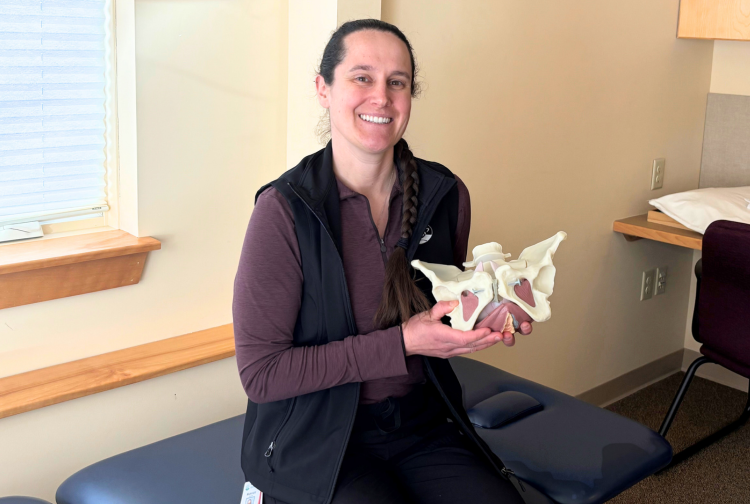
Gifford Health Care has announced the addition of pelvic floor physical therapy (PFPT) as part of its growing rehabilitation services, expanding access to specialized care for patients across the White River Valley.
Pelvic floor dysfunction is more common than many people realize, yet it is rarely discussed. Symptoms such as urinary incontinence, bowel dysfunction, pelvic pain, sexual dysfunction, and abdominal or hip pain can significantly impact quality of life, participation in exercise, and overall well-being.
By offering pelvic floor physical therapy locally, Gifford is helping reduce barriers to care for rural residents who previously may have needed to travel long distances for treatment.
“Many people think pelvic floor therapy is just doing Kegels,” said Makenzie Williams, DPT, physical therapist at Gifford. “But it’s much more than that. Like any muscle group in the body, the pelvic floor needs to be able to contract, relax, and move through its full range. Therapy focuses on building awareness, improving strength and mobility, and addressing patterns that may be contributing to symptoms.”
Williams earned her undergraduate degree in health science and her doctorate of physical therapy from Nazareth College in Rochester, N.Y. After beginning her career in outpatient orthopedic physical therapy, she became increasingly aware of how prevalent pelvic floor issues were among patients—and how often individuals felt they simply had to live with symptoms. She began specialized training in pelvic floor physical therapy in 2022 and continues advanced coursework to expand her expertise.
Pelvic floor physical therapy can help address a wide range of concerns, including:
• Urinary or fecal incontinence,
• Urinary urgency and frequency,
• Constipation or bowel dysfunction associated with IBS,
• Pelvic, abdominal, hip, or low back pain,
• Pain during or after sexual activity,
• Pregnancy and postpartum recovery,
• Changes following menopause,
• Recovery after prostate cancer treatment or abdominal surgery.
People of all genders and ages may benefit from this care. Whether symptoms have been present for weeks or for years, improvement is possible.
A first visit is tailored to each patient’s comfort level. The evaluation typically includes discussion of symptoms and goals, assessment of hip and spine mobility and strength, and—with patient consent—a pelvic floor muscle assessment. Together, the therapist and patient develop a plan of care based on individual needs and preferences.
Outcomes vary depending on each patient’s condition and goals. Some individuals achieve meaningful improvements in just a few visits, while others benefit from longer term therapy to manage chronic conditions. Improvements may include reduced pain, fewer leakage episodes, improved bladder or bowel control, and greater strength and mobility.
“Pelvic floor symptoms are more common than people think,” Williams said. “Just because something is common doesn’t mean you have to live with it. If a symptom affects your quality of life, it’s worth addressing.”
Offering this specialty service locally is especially meaningful in a rural region, where frequent travel for care can be challenging.
Pelvic floor therapy is also an important part of Gifford’s broader women’s health services. From adolescence through childbearing years and into menopause and beyond, women experience natural life changes that can affect pelvic health, bladder, and bowel function, and overall well-being.
To learn more about pelvic floor physical therapy or to schedule an appointment, contact Gifford Rehabilitation Services at 802-728-7100.
 Facebook
 Instagram
 YouTube
 LinkedIn